
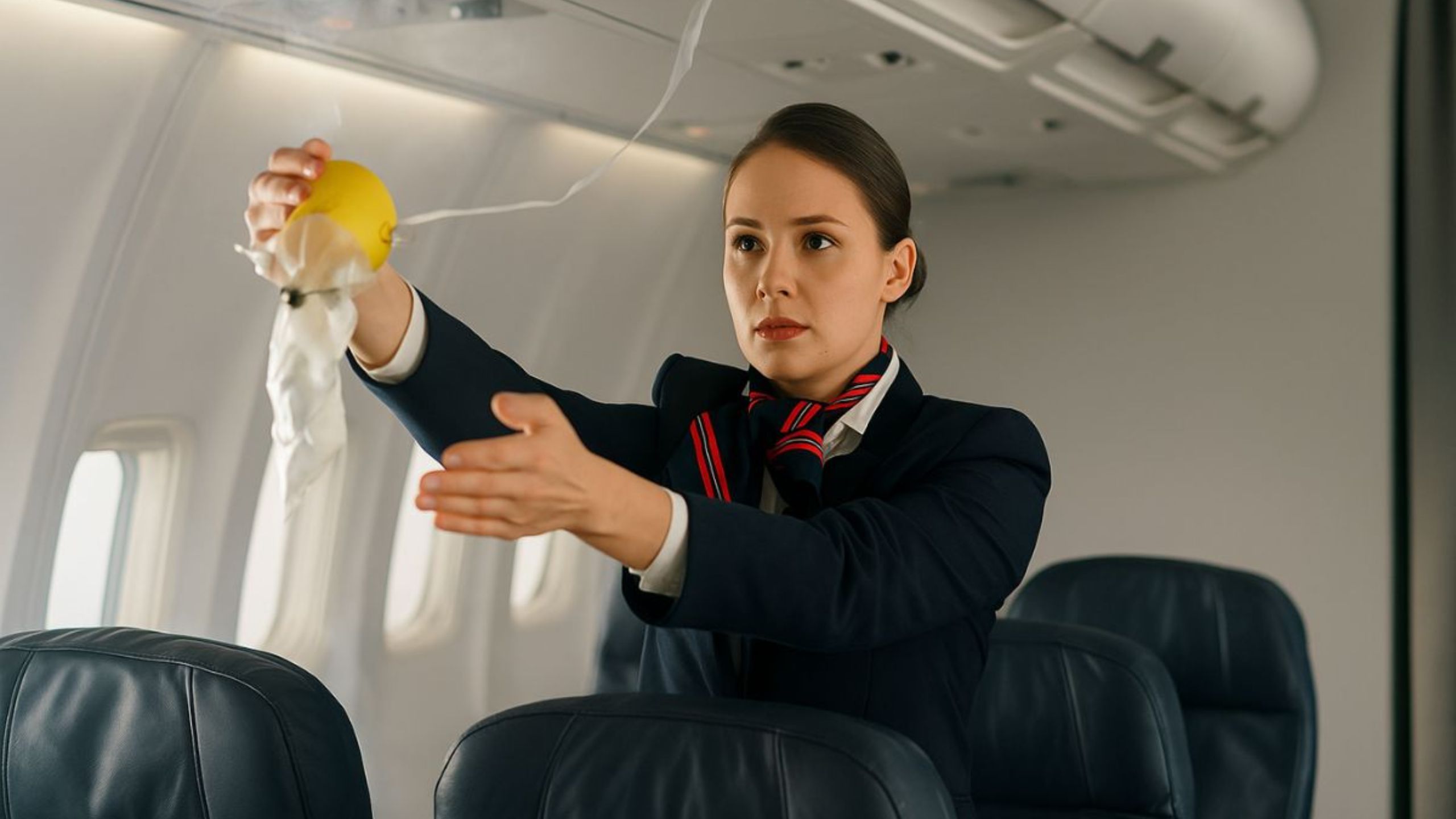
“Passengers see a delay. Cabin crew see 50 decisions happening at once.”
When most people think about cabin crew, they imagine welcoming passengers, demonstrating safety procedures and serving meals.
But that is only a small part of the job.
The real test of a cabin crew member begins when something doesn’t go according to plan.
A sudden storm.
A passenger collapsing.
Unexpected turbulence.
A technical issue.
An emergency landing.
These are the moments when passengers stop looking at the aircraft and start looking at the cabin crew.
Why?
Because they become the face of confidence, safety and reassurance.
Let’s explore what really happens behind the scenes when flights don’t go as planned.
Cabin Crew Are Safety Professionals First
One of the biggest misconceptions is that cabin crew are hired mainly for customer service.
The reality is very different.
Before every flight, cabin crew are responsible for:
- Conducting safety checks
- Verifying emergency equipment
- Checking cabin readiness
- Coordinating with the flight deck
- Ensuring all safety procedures are followed
Serving meals is part of the job, but passenger safety is always the highest priority.
That’s why airlines invest months in rigorous training before allowing a new crew member to operate a flight.
Weather Diversions: When the Destination Suddenly Changes
Weather is one of the biggest factors that can affect flights.
Heavy rain, thunderstorms, dense fog, snow or strong winds can make landing unsafe.
In such situations, pilots may decide to:
- Delay departure
- Hold in the air until conditions improve
- Divert to another airport
Passengers often become frustrated because they don’t understand why the change happened.
Meanwhile, the cabin crew immediately begin a completely different set of responsibilities.
They must:
- Keep passengers informed without creating panic
- Answer repeated questions calmly
- Assist elderly passengers and families
- Coordinate with the cockpit
- Prepare the cabin if required
A diversion is not simply a change of destination.
It creates an entirely new operational plan that the crew must manage professionally.
Medical Emergencies at 35,000 Feet
Imagine someone suddenly experiences chest pain during the flight.
Or a passenger faints.
Or a child develops breathing difficulties.
The aircraft cannot simply pull over.
This is where cabin crew training becomes critical.
Crew members are trained in:
- First aid
- CPR
- Using onboard medical equipment
- Managing unconscious passengers
- Communicating medical information to the pilots
Depending on the situation, the pilots may coordinate with ground based medical support and decide whether the aircraft should continue or make an emergency landing.
Every second matters.
Turbulence: Staying Calm When Everyone Else Isn’t
Most passengers become anxious during turbulence.
Some grip their armrests.
Some panic.
Children may start crying.
During these moments, cabin crew must remain calm even if the turbulence is severe.
They quickly:
- Secure the cabin
- Stop meal service if necessary
- Ensure everyone fastens their seat belts
- Follow cockpit instructions
- Reassure passengers
Their calm behaviour helps passengers remain calm.
Confidence is contagious.
Technical Delays: More Than Just Waiting
Many people think a technical delay is simply “the flight is late.”
In reality, every delay involves multiple safety checks.
Pilots, engineers, ground staff and cabin crew work together to ensure the aircraft is completely safe before departure.
During this time, cabin crew:
- Keep passengers updated
- Answer concerns professionally
- Coordinate boarding procedures
- Manage expectations
- Maintain order inside the cabin
No airline wants delays.
But every airline chooses safety over speed.
Emergency Landings: Every Second Counts
Emergency landings are extremely rare, but cabin crew are trained for them throughout their careers.
Training includes:
- Evacuation procedures
- Fire and smoke management
- Brace position demonstrations
- Door operations
- Slide deployment
- Passenger management during evacuation
Even if they never experience a real emergency, every crew member must be prepared as if it could happen on the next flight.
Because emergencies don’t give advance notice.
Managing Angry or Difficult Passengers
Not every challenge is technical.
Sometimes the biggest challenge is human behaviour.
Passengers may become upset because of:
- Flight delays
- Missed connections
- Lost baggage
- Seat issues
- Weather disruptions
Cabin crew must remain professional regardless of the situation.
They don’t argue.
They don’t lose patience.
Instead, they:
- Listen carefully
- Show empathy
- Explain the situation honestly
- Offer practical solutions whenever possible
Their communication skills often prevent small frustrations from becoming major conflicts.
Teamwork Between Cabin Crew and Pilots
Passengers usually see the pilots and cabin crew as separate teams.
In reality, they work as one.
Throughout every flight, there is continuous communication between the cockpit and the cabin.
Cabin crew update pilots about:
- Passenger medical conditions
- Cabin safety
- Security concerns
- Passenger behaviour
- Operational issues
Pilots, in turn, inform the cabin crew about:
- Weather conditions
- Expected turbulence
- Delays
- Diversions
- Landing preparations
This teamwork ensures that everyone onboard receives the safest possible experience.
Keeping Passengers Calm Is a Skill
One of the most underestimated responsibilities of cabin crew is emotional management.
Passengers watch the crew closely.
If the crew remain calm, passengers usually remain calm.
If the crew panic, passengers panic too.
That’s why airlines teach cabin crew:
- Voice control
- Body language
- Professional communication
- Crisis management
- Emotional intelligence
Sometimes a reassuring smile and clear explanation can reduce anxiety more effectively than any announcement.
Why Airline Training Is So Rigorous
Many people wonder why cabin crew training is so demanding.
Now the answer becomes obvious.
Crew members are trained in:
- Aviation Security (AVSEC)
- Safety and Emergency Procedures (SEP)
- First Aid
- Firefighting
- Dangerous Goods Awareness
- Crowd management
- Passenger psychology
- Emergency evacuations
- Communication skills
- Grooming and professionalism
This training ensures they can respond confidently, whether they’re serving breakfast or managing an unexpected emergency.
The Reality Behind the Uniform
Passengers often notice the uniform.
But they don’t always see the responsibility behind it.
Every flight carries hundreds of lives.
Cabin crew are trusted to protect those lives not just provide service.
Behind every smile is:
- Extensive training
- Discipline
- Responsibility
- Teamwork
- Commitment to safety
That is why airlines have such high selection standards.
Final Thoughts
The next time your flight is delayed, diverted or experiences turbulence, remember this:
The cabin crew are not simply waiting for the situation to improve.
They are constantly assessing, communicating, reassuring, coordinating and making decisions to keep everyone safe.
Passengers may see a delay.
Cabin crew see responsibility.
Passengers may see turbulence.
Cabin crew see procedures.
Passengers may see uncertainty.
Cabin crew become confidence.
That is what truly defines this profession.
Build a Career That Goes Beyond Service
At Bloom And Fly Academy, we prepare students for the real responsibilities of the aviation industry not just airline interviews.
Our experienced trainers, many of whom have worked in leading airlines, help students understand what the job truly demands, from communication and grooming to safety awareness, emergency preparedness and professional behaviour.
Because becoming cabin crew isn’t just about wearing a uniform.
It’s about becoming someone passengers can trust when it matters most.
Website: https://bloomandfly.com/
bloom and fly academy jaipur, cabin crew training jaipur, aviation academy jaipur, aviation training institute jaipur, cabin crew course jaipur, aviation training center jaipur, hospitality aviation academy jaipur